Home & Kitchen Corporate Gifts: The Category People Actually Keep
Housewares top the industry's usefulness rankings, and nearly half of recipients say they would keep one more than five years. Here is how to choose boards, aprons and hosting kit that earn a place in someone's kitchen.
A home gift crosses a line most corporate presents never do: it goes past the office and into the place where the recipient actually lives. That is a privilege, and it comes with a higher bar. A board, an apron or a hosting piece has to survive being compared with things the recipient chose themselves — so anything that looks like conference swag is in the back of a cupboard within a week. Get it right, though, and few categories stay in use as long. The pieces that survive that comparison have a pattern, and it is not the one most catalogues push.
Why home gifts outlast the rest
Housewares score higher than any other category the industry measures on the trait that decides what gets kept at all: usefulness. In ASI's 2026 study, 91% of consumers named usefulness as their reason for keeping a promotional houseware item — ahead of USB drives, bags and drinkware. Nearly half would keep one for more than five years and 80% would use it at least weekly, generating around 1,200 impressions at roughly a third of a cent each. On perception, 81% of recipients said the gift left them with a more favourable impression of the advertiser and 79% said they would be more likely to do business with it — self-reported intent from US consumers rather than measured purchasing (ASI, 2026). Read those numbers with two limits in mind: ASI surveys US consumers receiving logoed promotional housewares, a different product from a premium, discreetly branded client gift, and its category charts bundle housewares together with tools. The direction holds even so — home items are kept because they are used, not because they are decorative.
Timing
Home gifts suit year-end, milestone and thank-you moments, and they fit an occasion that is growing: 28% of consumers say they plan to host more at-home gatherings in 2026, up four points year on year, rising to 47% among Gen Z (IHA, 2026). That is US consumers' stated intent rather than measured hosting, and not data about corporate buyers at all — but appetite for hosting at home is rising rather than falling, which is a tailwind for the occasion these gifts serve. They also work well for remote teams, where a hosting piece reaches a home the company will never visit. Order earlier than the category suggests: home gifts are routinely left to the year-end rush, and boards, aprons and serveware are exactly the items that decorate slowly and sell out first.
What to give, and at what price
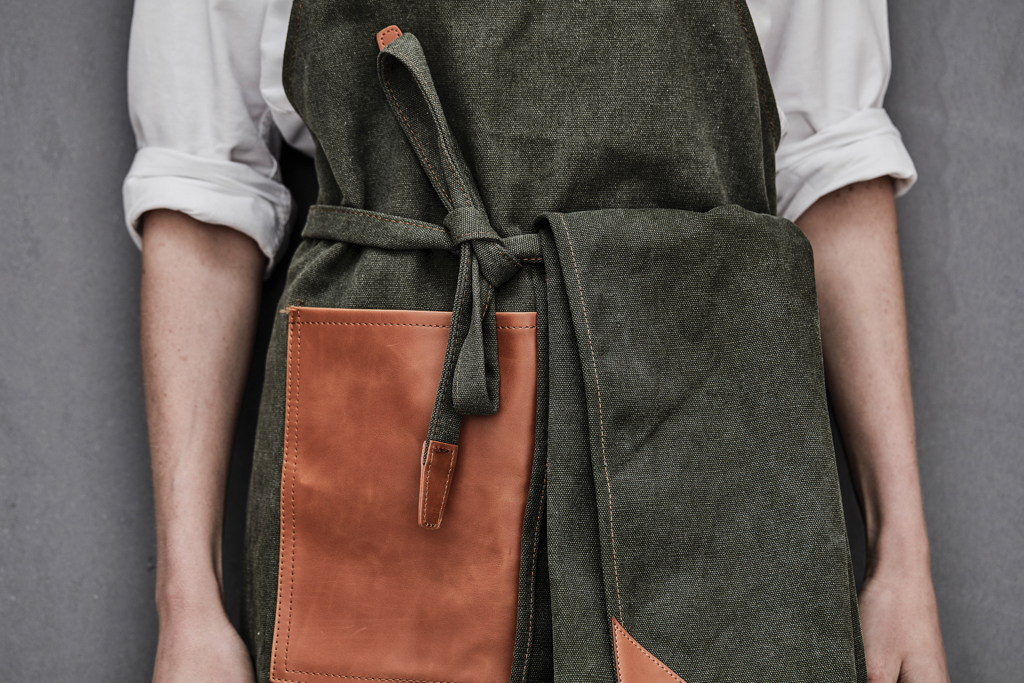
- €10–30 — entry: a heavy-duty cooking apron for teams, cook-alongs and welcome boxes.
- €30–60 — mid: a wooden serving board that works for everyday meals and hosting alike.
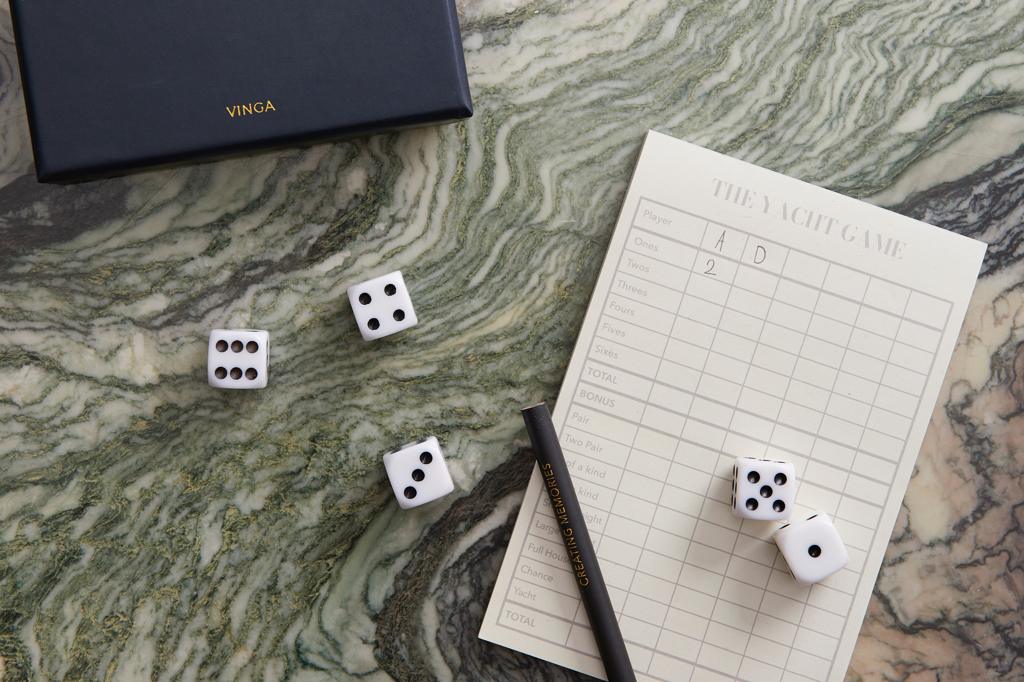
- €60–120+ — premium: a curated hosting set, or a design-led table game for clients whose homes see guests.
Choose a use, not an occasion. A board, an apron and a table game earn their place because someone reaches for them without thinking; decorative bowls, themed serveware and single-purpose gadgets are admired once and then shelved. There is a positioning argument too: home and kitchen accounts for under 2% of US distributor promotional sales — about 1.7%, read from PPAI's category chart — against 10.2% for drinkware and 26.6% for apparel, with drinkware and food gifts counted separately so the true home-gifting share is larger (PPAI, 2024). Those are US distributor sales shares rather than a read on European buying, but the pattern is familiar enough: bottles and hoodies are the default, and a well-made board at least arrives without a dozen competitors' versions already in the cupboard.
What to avoid
Skip knives and blade sets. They are treated as an unlucky gift in several European and Asian cultures — the symbolism is of cutting a relationship — and they raise avoidable shipping and workplace-policy questions. Avoid anything that clashes with a real kitchen: novelty prints, heavy logos on visible surfaces, and thin materials that warp after a few washes. Be careful with strongly scented candles and taste-specific decor, which impose your preferences on someone else's home. And skip electrical appliances for cross-border lists, where plug standards and voltage turn a nice gesture into a drawer ornament.
Rules and compliance
Anything that touches food falls under the EU food-contact framework (Regulation (EC) No 1935/2004), which requires materials to be safe and made under good manufacturing practice. A written Declaration of Conformity is legally required only for materials covered by a specific EU measure — plastics under Regulation 10/2011, plus ceramics, regenerated cellulose and active or intelligent materials — so ask for it by name on plastic and ceramic serveware. Wood and bamboo have no EU-wide specific measure and are governed by national rules, so for boards and utensils ask the supplier for their food-contact test reports and written compliance statement rather than assuming a Declaration of Conformity exists. Wooden and bamboo items should carry FSC or PEFC chain-of-custody certification with the certificate number on the supplier's documentation, not just a claim of sustainable sourcing on the packaging. Cross-border lists need one extra check: food-contact documentation issued for one EU market travels across the bloc, but UK and Swiss deliveries follow their own regimes. Internal gift-value caps apply as ever, and they are the recipient employer's policy rather than law: no EU instrument sets a gift-value ceiling at all, as our guide to gifting policy sets out. Public-sector, regulated-industry and healthcare recipients are typically tighter or barred outright, so confirm the recipient's own threshold before you cost a list. Which regime catches which line across the rest of a catalogue, and what a logo does to the file, is in our product safety guide.
The gift that meets the family
A home gift is judged by someone's partner, guests and children as much as by the recipient, which is exactly why it is worth spending properly on. Choose materials that age well, keep the branding to an underside or an edge, and pick pieces that suit an ordinary Tuesday rather than a staged photograph. Home gifts do their best work in long-term client relationships — see our client gifts guide. Browse the catalog for boards, aprons and serveware, or contact us and we will help you choose something that earns its shelf.