Sustainable corporate gifts: how to give well without the greenwash
How we evaluate sustainability claims at PleasantPresent — and what we tell clients to look for before they sign off on an order.

Five years ago, "sustainable corporate gifts" was a niche request. Today, it's in almost every brief that lands on our desk — and at the same time, the term has been so thoroughly diluted that it's hard to tell a genuine eco-product from one with a green sticker glued onto plastic.
This is a guide for the person who has to sign off on the order. We'll go through what actually matters, where the most common traps are, and how to ask suppliers the right questions.
Why this matters now (and not in a vague way)
Three forces have made sustainability a real procurement criterion, not a PR sentence:
-
- Regulation is catching up. The EU's Corporate Sustainability Reporting Directive (EUR-Lex, 2022) asks in-scope companies to report material impacts across their value chain — which is why procurement categories like branded merchandise increasingly show up in supplier questionnaires. Scope and timing are still moving: the 2025 "stop-the-clock" directive (EUR-Lex, 2025) delayed the later reporting waves by two years, and further simplification is under negotiation, so check with your own sustainability team where your company currently stands rather than assuming the rule already applies to you.
- Employees and clients notice. When a Gen Z employee unwraps a "premium" gift box and finds it's mostly plastic and air, the photo goes to a Slack channel, not a thank-you note.
- Resale value is part of the lifecycle now. A €40 organic cotton tote that lasts three years beats a €12 polyester one that ends up in a drawer.
The good news: doing this well is rarely much more expensive than doing it badly. The bad news: it requires asking suppliers a few uncomfortable questions.
What to look for in the material
Most sustainability claims live or die at the material level. The shortlist worth knowing:
- Recycled cotton or rPET — recycled polyester made from PET bottles. Not perfect (microfibers are still an issue), but a meaningful improvement on virgin polyester. Look for the Global Recycled Standard (GRS) certification.
- Organic cotton — needs GOTS certification to mean anything. "Organic" on its own is a marketing word.
- FSC-certified wood and paper — covers responsibly managed forests. Common on notebooks, pencils, packaging.
- Bamboo — fast-growing, low-input, but watch for resin-heavy composite products labeled "bamboo" that are mostly plastic.
- Bioplastics (PLA) — better than petroleum-based plastic only if they actually end up in industrial composting. In a home bin, they behave like regular plastic.
- Cork — genuinely renewable, harvested without killing the tree. Great for accessories and notebook covers.
If a supplier can't tell you what the product is actually made of in percentage terms, that's the answer to your question.

The certifications worth checking
A certification isn't a magic shield, but the credible ones do represent real audits. The ones we look for:
- GOTS (Global Organic Textile Standard) — for organic textiles
- GRS (Global Recycled Standard) — for recycled materials
- FSC (Forest Stewardship Council) — for wood and paper
- OEKO-TEX Standard 100 — for safe levels of chemicals in textiles
- B-Corp — for the supplier itself, not the product
- Cradle to Cradle — full-lifecycle assessment, rare but rigorous
If a supplier name-drops a certification, ask for the certificate number. It should be checkable on the issuing body's website.
The greenwashing red flags
Things that look sustainable but usually aren't:
- "Eco-friendly" with no further qualification. Means nothing on its own.
- A green colour scheme and leaf icon on the packaging. Pure design language.
- Single-use bamboo cutlery wrapped in plastic.
- "Biodegradable" without specifying the conditions (industrial composting? marine? landfill?).
- "Carbon neutral" via offsets only, with no actual reduction in the product's footprint.
- A "sustainable collection" that's a small section of an otherwise conventional catalog.
Five categories that work in practice
What we order most for clients who actually want this to land:
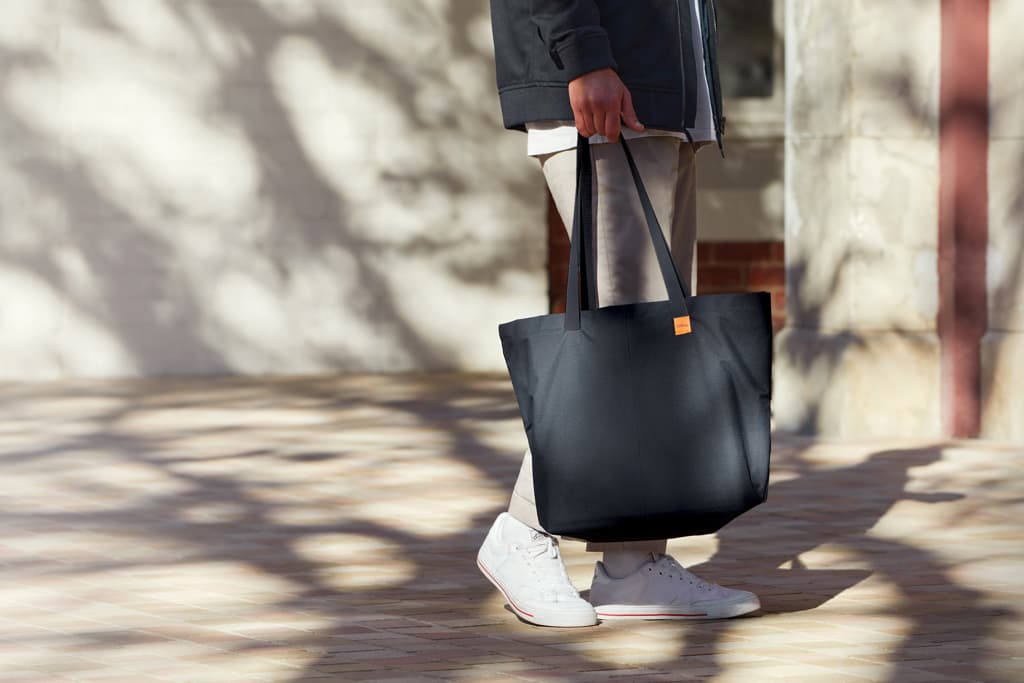
- Organic cotton totes and apparel — €8–25 range. GOTS-certified, screen-printed with water-based inks.
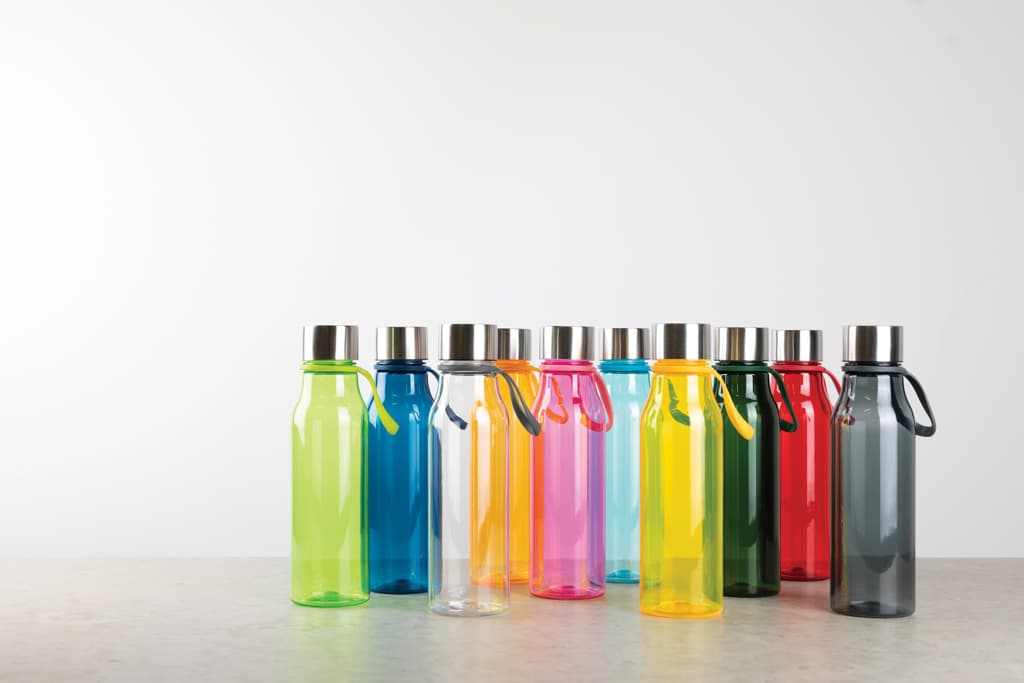
- Recycled aluminium or stainless steel bottles — €15–35 range. Long-life, refillable, replace dozens of plastic bottles.
- FSC-certified notebooks with recycled paper — €10–20 range. Decent paper weight matters more than fancy covers.
- Cork or recycled-leather accessories — €20–40 range. Card holders, laptop sleeves, small bags.
- Locally sourced food and drink — regional honey, small-batch chocolate, craft tea. Zero shipping footprint within Europe, and recipients actually consume them.
What we'd skip: most "bamboo" gadgets, "biodegradable" disposable items, and any "eco" gift set heavy on packaging.
A practical sustainability checklist
Before signing off on an order, we run through this with clients:
- Is the material specified in percentage terms (e.g., "80% recycled cotton" not "made from recycled materials")?
- Are the certifications named with reference numbers?
- Where is the product actually manufactured? (Europe-made beats shipping from Asia just on freight alone.)
- What's the expected useful life? Three years of daily use is better sustainability than two months of occasional use.
- What happens to the product at the end of life? Can it be recycled in standard streams?
- Is the packaging recyclable, and is it appropriate to the gift, or oversized?
If the supplier hesitates on most of these, you have your answer.
The honest summary
A truly sustainable corporate gift is one that's well-made, useful, materially honest, and produced as close to the recipient as practical. It usually costs slightly more upfront and significantly less in regret. The lazy way is a green sticker on a polyester pen. The good way is asking three more questions before the PO goes out.
That's the part we can help with — both the questions and the suppliers who answer them properly.
If you want the gift to carry a cause as well as a lower footprint, our charitable and cause-led gifts guide covers how to do that credibly. Browse the catalog for recycled and reusable products, or contact us and we will help you put the right questions to a supplier.