Toys and Family Gifts: What Reaches the Household, and the Toy Law Most Articles Misread
Under a quarter of EU households include children, so a family track can never be the whole programme. What to do with the other three quarters, and why putting your logo on a toy makes you its manufacturer rather than its buyer.
A pad-printed logo costs a few cents a unit. On a toy it can make you the legal manufacturer of a children's product. Two more: much of any workforce has no child to hand a toy to, finding out who does means asking about private lives, and the toy law in the headlines does not apply until 2030.
What a children's gift actually reaches
In 2024, 23.6% of the EU's nearly 202 million private households included children (Eurostat, 2025). That counts households, not employees: your staff share is probably higher, since employed people cluster in working-age households, but by how much no figure says. Size the track against your own list: one track in a programme, never the programme.
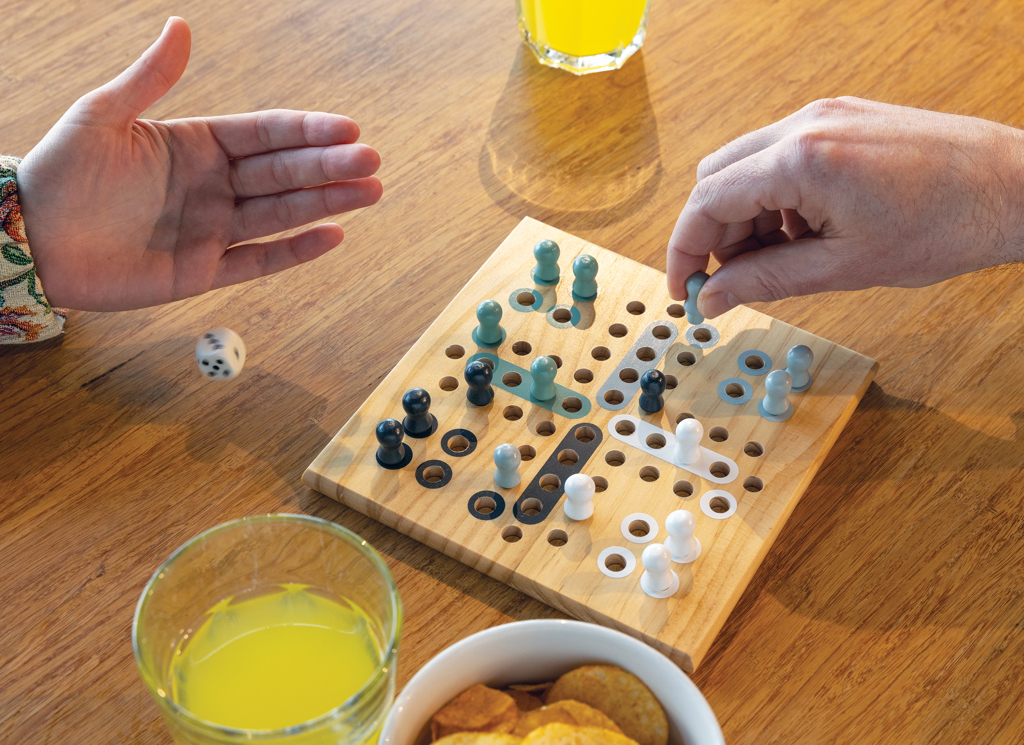
Sized right it is one modest thing: a wooden Ludo game that stays on the kitchen table, priced as a landed cost per head, because the object is not the whole spend.
The 2026 toy-law headline that is wrong
The new EU Toy Safety Regulation does not apply from 2026. Regulation (EU) 2025/2509, adopted 26 November 2025, applies from 1 August 2030 and repeals Directive 2009/48/EC then; only Articles 28-44 and 49-55 apply from 1 January 2026 (EUR-Lex, 2025), and those institutional articles bind Member States, the Commission and notified bodies, not a company buying toys; until then your law is Directive 2009/48/EC as transposed nationally. The harmonised EN 71 standards are voluntary, but a toy built and tested to them is presumed to meet the essential safety requirements they cover, hence the reports you ask for.
Putting your logo on a toy makes you its manufacturer
Under Article 12(1) of Regulation (EU) 2025/2509, anyone placing a toy on the market under their own name or trademark — or substantially modifying one on the market in a way that may affect compliance, then making it available — is treated as its manufacturer (EUR-Lex, 2025): technical file, safety assessment, CE marking, EU declaration of conformity, for a gift ordered from a catalogue.
Article 12 applies from 2030, but you cannot wait: Annex VIII's correlation table maps it to Article 8 of Directive 2009/48/EC, in force today (EUR-Lex, 2025), and the Directive's modification limb carries no "substantial" threshold, a stricter test than the 2030 one. The clean route is to brand a separate outer gift box and card, leaving the toy and its retail packaging untouched: a logo on the toy's own packaging can present it as yours. The other is to take the manufacturer role knowingly and budget for it.
Toy or not-toy decides your law
Toys that might be dangerous for children under 36 months must carry the warning "Not suitable for children under 36 months" or the pictogram, at least 10 mm across, with a brief indication of the hazard calling for it, which may sit in the instructions, not on the pack; exempt are toys manifestly unsuitable for under-threes by function, dimensions or properties (Annex III, point 2, EUR-Lex, 2025). That applies from 2030; the correlation table maps it to Annex V of today's Directive, a materially similar warning with the same hazard indication — so the age line by itself is not the whole of it — though read the leaflet before you reject a carton.
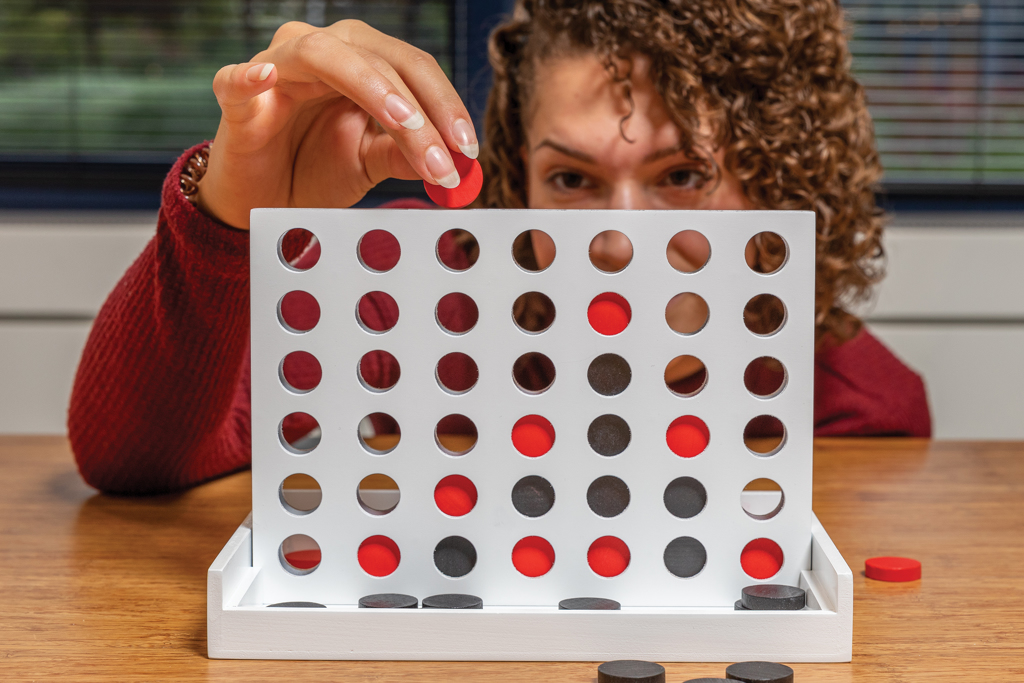
A product is a toy when it is designed or intended, whether or not exclusively, for use in play by children under 14: a wooden connect four game may sit either side of the line. A supplier's written "not a toy" is cover, not a classification.
The non-toy half of the box falls under the General Product Safety Regulation: Article 16 of Regulation (EU) 2023/988, in force since 13 December 2024, bars a covered product from the market unless an EU-established operator is responsible for it (EUR-Lex, 2023). It does not reach toys: Article 2(1) switches off Chapter III, Section 1 for products under Union harmonisation legislation, the duty running instead through the market surveillance framework of Regulation (EU) 2019/1020; have the supplier name route and operator per toy line in writing. The same hinge decides the electrical and food-contact half of a mixed box — our product safety guide maps it line by line.
The paperwork, and who is left holding it
Ink is a substance applied to a children's product, so the method is a compliance decision: engraving adds nothing but holds one tone, a burn mark that reads cleanly on pale wood and can disappear into dark or stained stock; pad printing gives colour, needs a sealed surface and must meet the EN 71-3 migration limits. Ask whether the test report covers the decorated article or the blank, and check the imprint in millimetres.
Minimum order quantities count per item, per colourway and per decoration position, not per order: blanks often go to outer-carton quantity, decorated lines start at 25-100 pieces, a second position or colour adding its own set-up and run charge. A menu multiplies that: 200 recipients across four options is four orders of fifty. Lead times run in working days from artwork approval, and the stretch before it is yours: revisions restart the proof cycle, and a decorated wooden toy needs a pre-production sample, about a week each way.
Into the contract, per toy line: EU declaration of conformity and CE evidence before artwork approval; current EN 71-1, -2 and -3 reports naming laboratory, date and product reference, confirmed in writing to cover your run; manufacturer of record if you decorate; age grading and exact warning wording per destination language; recall and indemnity. A non-harmonised line — a board game graded for adults — has neither, and Article 30(2) of Regulation (EC) 765/2008 bars affixing CE where no harmonisation legislation calls for it: ask instead for the supplier's test evidence and EU-established responsible operator. Anything electrical or battery-powered is the opposite case: harmonised under its own legislation, with CE marking and a declaration of conformity — ask for both.
Get the over- and under-run tolerance into the order: plus or minus five per cent is common, some suppliers work to ten, European stock lines decorated to order frequently ship exact. Where one applies it is invoiced as supplied, so 200 named recipients can become 190, correctly billed: order above headcount or have it zeroed. Decorated stock is non-cancellable from artwork approval, not delivery. Quote packing and carriage separately, per parcel to homes or per pallet to an office; across 200 households they often match the goods. Across a customs border, check the commodity code. For home parcels ask in writing for DDP, making the supplier importer of record; without it the carrier bills the recipient import VAT and duty at the door. Into a country where you have an entity, bulk DAP with it as importer of record is usually cheaper: import VAT the supplier pays under DDP sits in its price and you cannot reclaim it.
An equal-value option, and no one has to explain why
Nobody should have to say whether they have children to get a gift worth what colleagues got: put a non-toy option of equal value on the menu. A recycled canvas picnic blanket goes home, gets used with whoever is there, needs no age and no explanation. An age-graded toy does need an age for the right item to reach the right house: have the band collected by the fulfilment partner as people choose, under your data-processing agreement with a deletion date, never in an HR record. Sequencing and budgeting it against everything else going out in December is in our year-end corporate gifting guide.
Gallup, with Workhuman — a recognition-software vendor with a commercial interest in the result — found well-recognised employees 45% less likely to have turned over after two years, across roughly 3,500 employees tracked 2022-2024 (Gallup, 2024). Before you reach for it upstairs: that is an observational association about recognition quality, not a measurement of gifts to families, never evidence that family gifting cuts turnover by 45%.
Two tracks at one budget line is more work; that is the part we take off you. Send the list with destination countries and a per-head budget; we will price both tracks, mark each toy line with who would be manufacturer of record if you decorate, and count lead times from approval. The catalog shows what arrives boxed and branded by its maker; contact us when the list is ready.