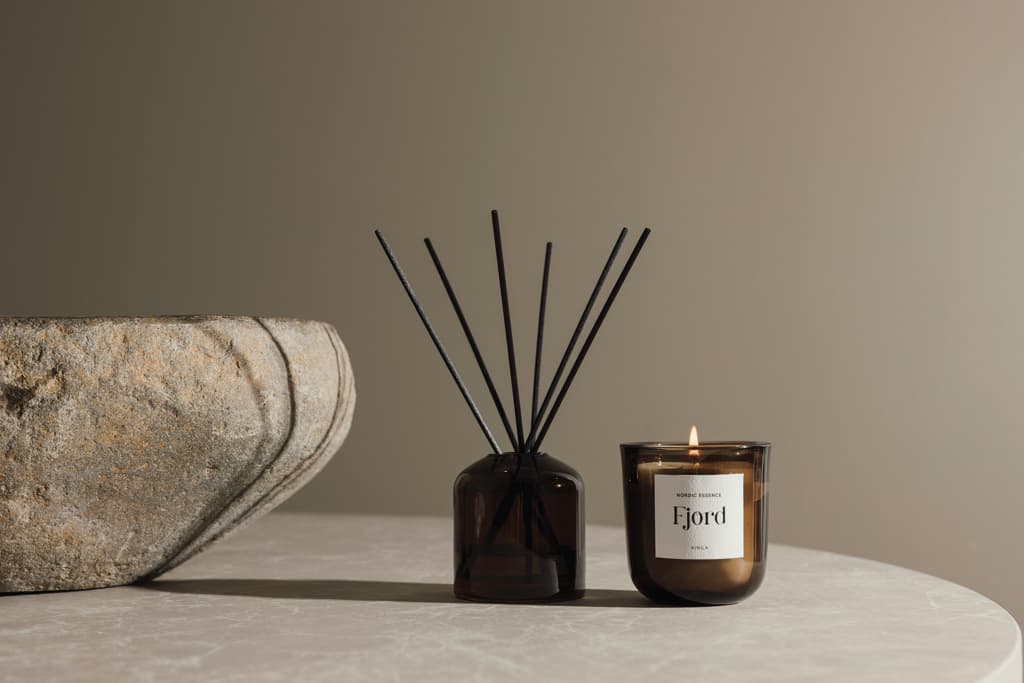
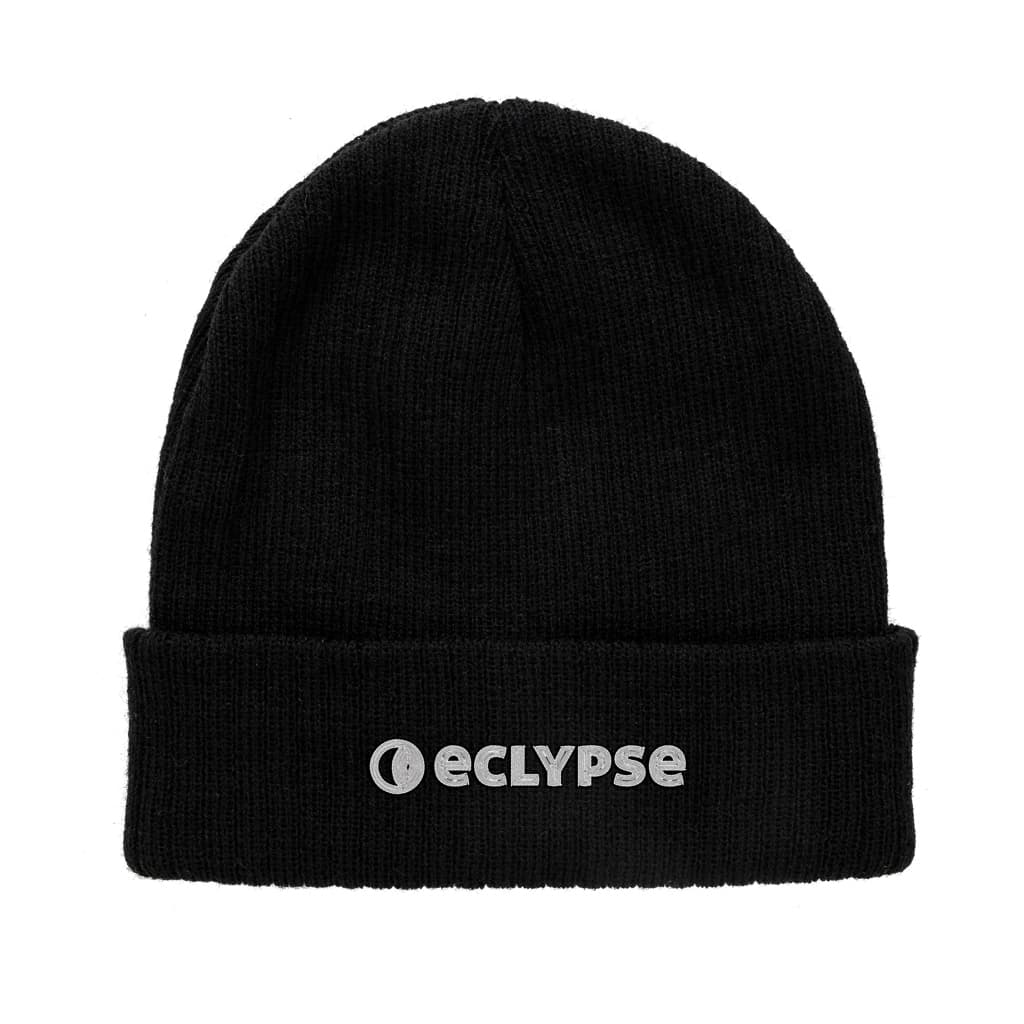
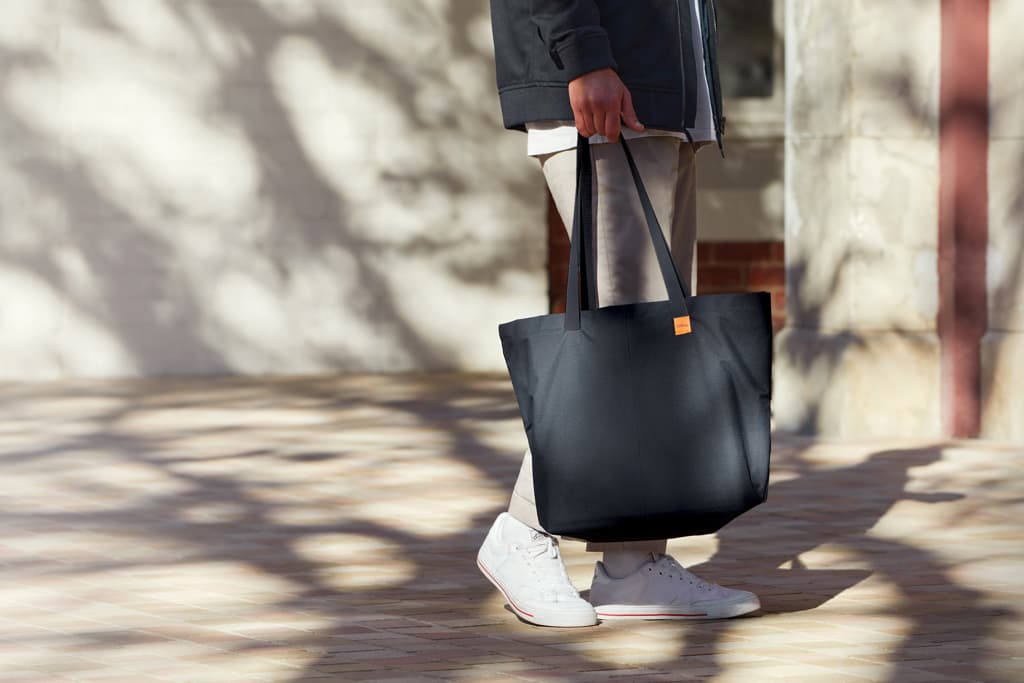
Wellbeing Corporate Gifts: A Thank-You That Does Not Pretend to Be a Cure
44% of EU workers report severe time pressure, and a 46,336-worker study of individual-level wellbeing programmes found participants no better off on all but one type. Nobody has tested a gift. This is the honest case for sending one anyway.
We sell wellbeing gifts, and the evidence does not support the claim usually attached to them — nor refute it, because nobody has tested a gift. What European workers report is organisational: time pressure, unrewarded effort, poor communication, contact that never stops. The biggest comparison we could find of individual-level wellbeing programmes — training, apps and coaching, not parcels — found participants no better off on every type but volunteering. This article makes the narrower case: a thank-you that claims nothing it cannot do.
What workers actually report
EU-OSHA's OSH Pulse 2025 ran 31 March to 14 April 2025 — telephone across the EU27, Iceland and Norway, online in Switzerland, EU27 figures resting on 25,688 interviews. Twenty-nine per cent of workers reported stress, depression or anxiety caused or worsened by their work, 44% severe time pressure, nearly 30% poor communication or cooperation (EU-OSHA, 2025). Its predecessor — 27,250 telephone interviews, 25 April to 23 May 2022, EU27 base 25,683 — recorded 46% for severe time pressure or overload, 27% for stress, depression and anxiety (EU-OSHA, 2022). Two waves of a series, not a matched panel; the movement runs both ways, stress worse and time pressure slightly lower. Broadly stable across three years is the most anyone can honestly say: neither a crisis curve nor flat.
EU-OSHA's plain-language summary says one in three workers feel their efforts go unnoticed, and gifting content quotes it constantly. The item behind it reads, verbatim, "Lack of rewards (e.g. pay, career opportunities, recognition) for all the efforts put in their job", at 34% — pay first, career opportunities second, recognition third, nothing published separating them. A gift addresses neither pay nor career progression. It is not evidence that gifting helps, and we will not use it as such.
A 46,336-worker test of these programmes found almost nothing
Fleming pooled 46,336 workers across 233 organisations, comparing participants in individual-level wellbeing programmes against non-participants. Across multiple subjective wellbeing indicators, participants "appear no better off" (Industrial Relations Journal, 2024). That phrase flattens a signed result: estimates were negative for resilience and stress management on every wellbeing outcome but work engagement, and for mindfulness on psychological distress, self-rated mental health and life satisfaction. Twelve intervention types were evaluated.
One exception: "Volunteering is the only type of intervention to suggest benefits for workers' well-being", and it had the highest participation rate in the study. But volunteering is something a worker does, a gift something a worker receives. If the active ingredient is the doing, it does not transfer to a parcel, and the study cannot tell us either way.
Four limits come with it. The design is cross-sectional, and the paper says the reverse-causality risk is seriously undermining all causal claims. It is UK-only. The fieldwork is the 2017 and 2018 waves of Britain's Healthiest Workplace, entirely pre-pandemic — worth saying next to 2025 survey data. And it studies programmes: no gift condition, no hamper, no parcel. It does not show gifts fail, only that the do-something-to-the-worker model has weak evidence.
The duty the law creates, and who it binds
Directive 89/391/EEC requires Member States to place employers under duties to evaluate risks to workers' safety and health and develop a coherent overall prevention policy covering technology, work organisation, working conditions, social relationships and working-environment factors, with a general duty to ensure safety and health "in every aspect related to the work" (EUR-Lex, 1989). Addressed to the Member States, with a transposition deadline of 31 December 1992, it reaches an employer through the national transposing act, not directly. And "psychosocial", "mental health" and "stress" appear nowhere in its text: psychosocial risks fall within it as interpreted by EU-OSHA and national transpositions — weaker and more accurate than "the Directive regulates psychosocial risks". No gift discharges that duty to assess and prevent, and no gifting line should claim otherwise internally.

The right to disconnect is not EU law
The European Parliament resolution of 21 January 2021 is a non-binding own-initiative text: paragraph 26 requests that the Commission propose an act on the right to disconnect, while Recital A states there is currently no specific Union law on it (European Parliament, 2021). No EU directive has been adopted since, and the Commission launched a second-stage social-partner consultation on 25 July 2025.
Portugal is the contrast we checked at source, binding employers under Portuguese labour law — your Portuguese staff, not your Portuguese customers. Several other Member States have rules too — differing country by country, some sitting in a collective agreement rather than a statute, and some Member States having nothing specific at all: "not EU law" does not mean "no duty where you are". Article 199.º-A of the Labour Code, added by Law 83/2021 of 6 December 2021 and in force from 1 January 2022, obliges employers to abstain from contacting workers during rest periods except in force majeure, treats less favourable treatment for taking that rest as discriminatory, and makes breach a serious administrative offence (Diário da República, 2021). Not messaging someone at 21:40 costs nothing and changes the exposure; noise reducing earplugs are a good object that does nothing about the person sending that message.
Burn-out is a job condition, not a personal one
The WHO classifies burn-out in ICD-11 as an occupational phenomenon and explicitly not as a medical condition (WHO, 2019). Its three dimensions — energy depletion or exhaustion, increased mental distance from or cynicism about one's job, reduced professional efficacy — are outcomes of job conditions, the second reason a parcel does not reach them.
Wellbeing washing is named often, measured almost never. The authors of a published scoping-review protocol state that outside one practitioner study, which found 38% of employees believe their employer engages in it, there is little data available to substantiate these concerns (MethodsX, 2025). That protocol reports no findings of its own; the 38% is one vendor survey, not an established figure. Manage the perception risk by consistency rather than percentages.
What to order, and what the gift is allowed to claim
Textiles and drinkware are the part of this category that scales: neither guesses at a body or a taste. At volume, budget sorts into three bands: roughly EUR 10-25 (decorated bottle, pocket notebook), EUR 25-60 (vacuum bottle, blanket), EUR 60 and up (a small set on a short list). The band is often set for you: many organisations cap what staff may accept well below your figure, and public-sector and regulated-industry codes tend to be the tightest of all. We have not surveyed them. Where the recipient is a public official, or anyone on the other side of a live tender, a zero is usually law rather than house policy, and your own anti-bribery rules bind you as the giver. Confirm both before choosing the object. Which rules those are, and why no EU instrument sets a figure at all, is in our gifting policy and anti-bribery guide.
Read the calendar of effort rather than of dates: the end of a heavy quarter, the week after a launch. A rest-themed parcel arriving in the week you added three deadlines makes the contradiction the message. Count backwards from the landing date, not forwards from the order date.
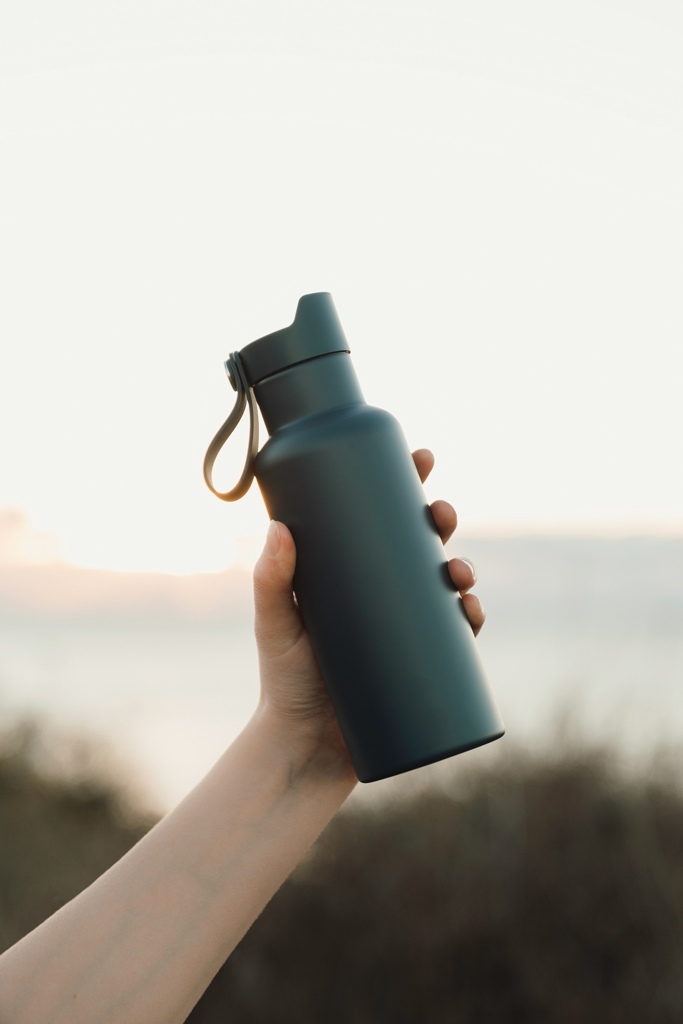
A wool blend blanket is embroidered or carries a woven label; a vacuum bottle is laser engraved or pad printed on the flat of the curve. One thing to settle before artwork: on a powder-coated body — which most catalogue flasks are — the laser normally takes the coating off and the mark reads as the metal beneath, usually a light silver-grey, though a pale or silver colourway can leave it low in contrast. On bare or brushed stainless there is no single result: depending on how the machine is set, the same file comes back either frosted pale or annealed dark. Engraved, it is one tone whichever body you are on, never colour; pad print is the route if the mark has to carry brand colour. Ask for a laser sample on your colourway before signing off fine text.
Minimums, decoration positions, proof cycles and over-run tolerance are not specific to this occasion and sit in our spa and personal care gifting guide, which also covers the product-side legal regime for the personal-care half of this category. One threshold: if the list spans several countries, is urgent, or falls under about EUR 15 a head landed once packing and carriage are counted, something redeemable beats the parcel — with one caveat: most tax authorities treat a voucher as a cash equivalent rather than a small gift, so the payroll treatment can differ from the parcel's and the thresholds are national. Ask your finance team before switching.
What to propose alongside it
Justify this internally as a thank-you on its own budget line, not as wellbeing spend, and take three things separately to whoever owns working conditions. Your national transposing act almost certainly requires a risk assessment; whether it reaches time pressure and communication depends on that act and on how your labour inspectorate reads it, since the Directive itself never uses the word psychosocial. Some Member States name psychosocial risks expressly, others leave them to interpretation. Whoever owns that assessment will know whether yours already covers them — we are not in a position to tell you. A contact rule of the Portuguese kind costs nothing and moves the exposure the survey measures. And a volunteering option, discretionary and employer-funded, is the only intervention type in that 46,336-worker study the paper describes as suggesting benefits for workers' wellbeing, competing for the parcel's budget on better evidence. We sell the parcel, so treat that as a disclosure rather than a recommendation. Still a stronger internal paper than a hamper.
What we will not put in writing is that any of it improves wellbeing: nothing in the catalogue has been measured against a wellbeing outcome, in either direction. A good gift arrives, costs the recipient nothing and asks nothing of them. Whether it is still in use a year later is a property of the object, not the gesture — the only thing here we would let you hold us to. Send a head count, the destination countries and whether you lean towards textiles, drinkware or both; we will come back with decorated prices, the minimums each option clears separately, and a lead time. Per-item prices are in the catalog if you would rather look first; contact us with the head count.