Spa and Personal Care Gifts: What Scales to 200 People, and What Doesn't
One category, three tiers of risk: a towel commits you to nothing, a scent commits you to a stranger's taste, and a cream with your logo on it makes you the person a regulator writes to.
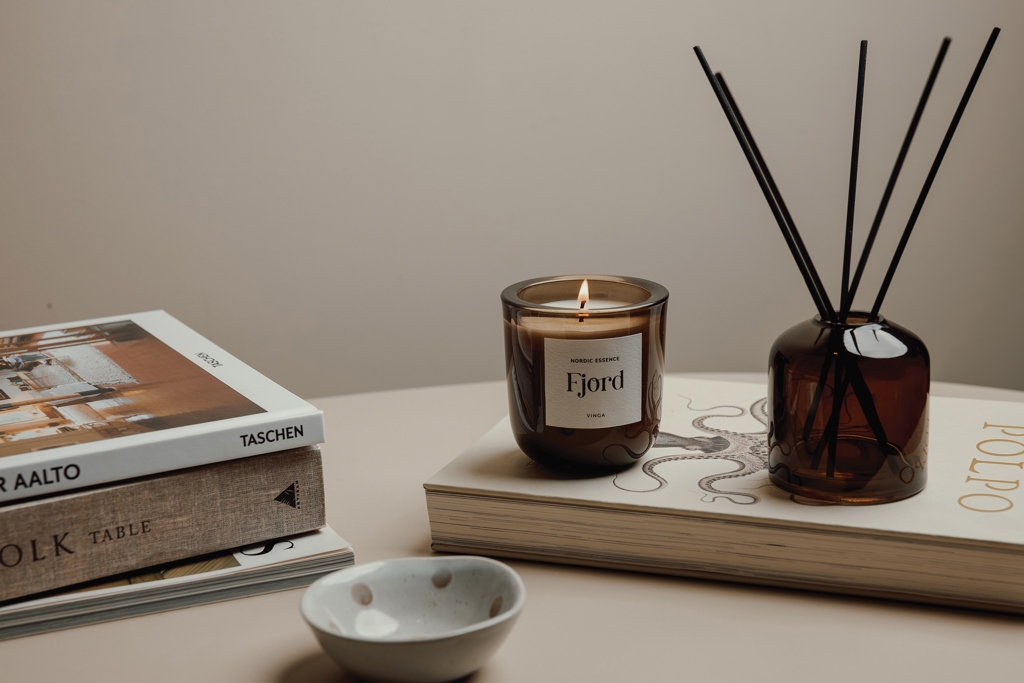
Personal care photographs best and lands worst: a robe, a candle and a hand cream assume different things about the 200 people opening them.
Three tiers of risk, not one category
Skin contact and scent assume something about the recipient's body and taste; a towel, robe or device does not. Cosmetics Europe, the industry's trade association, puts European retail sales at 110 billion euro in 2025 (Cosmetics Europe): self-reported spend, not an official statistic, not a gifting figure. It shows familiarity, nothing more; nothing measures how often such gifts go unused. Whether the gesture suits the moment is our wellbeing gifting guide's question.
Textiles and devices are the part that scales
A towel or robe is the safe end: no ingredient list. A VINGA Ornos GRS hammam robe comes in S/M and L/XL, so a robe programme means collecting sizes.
Devices guess nothing, but the own-name rule has a twin: Article 13(1) of the General Product Safety Regulation (EU) 2023/988, applicable since 13 December 2024, deems anyone placing a product on the market under their own name or trademark its manufacturer, as do the EMC and Low Voltage Directives for electrical equipment. A pad-printed logo beside the maker's brand is decoration; replacing that brand with yours is not, and moves the technical file and declaration of conformity to you. Either way ask for the EU declaration of conformity listing the Union legislation declared against, not just a CE mark; battery chemistry with the UN 38.3 test summary; plug type per destination.
Scent is a taste decision made on someone else's behalf
Candles are not cosmetics: the Cosmetic Products Regulation and the fragrance-allergen labelling below do not reach them. Another does: a scented candle, and certainly a reed-diffuser oil, is a mixture under the CLP Regulation (EC) No 1272/2008, whose Annex II requires "contains [name], may produce an allergic reaction" once a sensitising fragrance reaches 0.1 per cent. That duty sits on the supplier, and on you if you relabel. Two rules below reach candles too: the microparticle restriction sits in REACH, not cosmetics law, and catches mixtures generally (it removed loose glitter); green claims cover any trader's wording, so "natural wax" reads as on a hand cream. Ask for the CLP sensitiser wording before artwork.
A Ukiyo candle and fragrance sticks gift set suits twelve people you know and guesses at 200 rooms you have never stood in. Under taste sits allergy: a general-population study across Germany, Italy, the Netherlands, Portugal and Sweden put conservatively estimated prevalence of patch-test-confirmed fragrance contact allergy at 1.9% of adults, 95% confidence interval 1.5 to 2.5 (British Journal of Dermatology, 2015). That 2015 figure predicts nothing about who reacts to a gift, and counts neither irritation nor dislike, almost certainly the larger group though unmeasured.

Whose name goes on the bottle
Under the Cosmetic Products Regulation (EC) No 1223/2009, a distributor becomes responsible person where it places a cosmetic on the market, paid or free, under its own name or trademark, or modifies a marketed product so compliance may be affected (EUR-Lex, Article 4(6)). That person notifies the Commission beforehand; the label carries their name and address, nominal content, batch number, function, precautions and ingredients (EUR-Lex, Articles 13(1) and 19(1)). A minimum durability date is required only where durability is 30 months or less; above that a period-after-opening symbol replaces it: a missing expiry date is no defect, a missing open-jar symbol is.
A logo on an outer gift box is not obviously own-name placing; no Commission ruling we know of draws a bright line, so settle it in your supplier contract. A supplier's branded product handed out unchanged, say a VINGA x TGL body and hand care gift set, leaves the responsible person where it sits, provided someone else already placed it on the EU market. But Article 4(5) makes the importer responsible person: buying direct from outside the EU hands you the file, no logo of yours anywhere. The same paragraph lets an importer designate instead, by written mandate accepted in writing, a person established in the Union, usually the supplier's EU entity or a third-party service, so check where your supplier sits and, if outside the EU, get that mandate signed before the first shipment.
Three clocks, running at different speeds
Allergen labelling first. Regulation (EU) 2023/1545 requires 56 more fragrance allergens to be named individually, taking the list from 24 to 80, above 0.001% in leave-on and 0.01% in rinse-off products. Non-compliant products could be placed on the market only until 31 July 2026, now past, and made available until 31 July 2028 (EUR-Lex): placing has closed, making available has not, so old-label stock can still sit legally in a warehouse and be handed out unchanged. Branding it under your own name is a fresh placing, and that door shut in July 2026: an own-brand set needs the 80-allergen label whatever the stock's date.
Microplastics second, on several dates. Abrasive microbeads in rinse-off got no transition, restricted since Regulation (EU) 2023/2055 applied on 17 October 2023: a microbead scrub is unlawful now, not from 2027. Other rinse-off follows on 17 October 2027, leave-on on 17 October 2029, lip, nail and make-up on 17 October 2035 (EUR-Lex). Lip care, a gift-set staple, sits on 2035, not 2029; and from 17 October 2031 such products still containing synthetic polymer microparticles must carry "This product contains microplastics".
Green wording third. Directive (EU) 2024/825 amends the Unfair Commercial Practices Directive to ban generic environmental claims a trader cannot support with recognised excellent environmental performance (EUR-Lex). It binds Member States, due to transpose by 27 March 2026 and apply from 27 September 2026; traders are caught through national law from that date, not the Directive itself, and transposition varies. Governing trader-to-consumer practice, it bites on wording that travels with the product, not on a quotation between businesses.
A four-piece set is four orders
Each component carries its own minimum order quantity, the highest setting your floor: a towel from 50, a candle from 100, a cream from 250, on which figures 200 sets buy 250 creams and write off the surplus. Decorated minimums sit above blank ones, and a minimum normally attaches per colourway and decoration run, not per size: on a stocked robe you usually split one across S/M and L/XL, though made-to-order lines do sometimes carry one per size. Ask which applies to your line.
Material constrains decoration: a candle jar takes screen printing or laser etching on the glass, not only a label or a box, and etching reads frosted with no colour, so ask for both quotes. Relabelling a bottle edges toward own-name marketing; a robe is embroidered: thread only approximates a Pantone and pile swallows fine detail, so agree a minimum text height and a stitch-out. For a device, get the pad-print area in millimetres for your exact model and position.
One approval track per decorated component, the slowest setting the ship date: allow a proof revision on each, then the kitting window after the last lands. Decorated stock is non-cancellable after sign-off. Made-to-order production is usually quoted against an over- or under-run tolerance, often five to ten per cent, while catalogue stock decorated to order is more often delivered exact. Where it applies, a tolerance compounds across a set, so ask per line which regime you are on, buy a buffer only there, have under-runs credited, and agree who pays for a wrong proof.
Then delivery: who is importer of record into the UK, Switzerland or Norway? Alcohol-based fragrance and diffuser oils are commonly classified as flammable liquids, massage guns carry lithium batteries, and both can be barred from air freight and some home deliveries, so get the UN number per line first. Home delivery and collected robe sizes hand personal data to a supplier: agree a data-processing agreement with a deletion date. For anything cosmetic, contract two things: who is named responsible person, and a minimum shelf life as a number, twelve months remaining at delivery, with a right to reject below it.
The hierarchy is risk read against budget: a towel, an embroidered robe in two sizes and a massage gun are all safe for a large list but not one price band, and at 200 heads the gap runs to five figures. Fix the per-head figure, then the safest item that fits. Own-brand cosmetics stay legitimate, but their compliance file runs before artwork, not beside it: allow weeks, price it separately, never start one in a year-end deadline. We would rather talk a programme down a tier than sell it up: tell us where you think you sit, price it at volume from the catalog, and where the law is unsettled we will say so rather than guess when you contact us.