Onboarding kits that actually get used: a B2B guide for the first month
Most company welcome kits are at the back of a drawer by Friday. The fix is not a better hoodie — it is a smaller kit, fewer assumptions about what the new hire wants, and a real test of what still gets used in month three.

There is a recognisable pattern in B2B onboarding budgets. A new hire arrives on Monday, opens a box of company swag — a hoodie, a notebook, a water bottle, a stress ball — and by Friday most of it is at the back of a drawer. The kit was expensive. It produced almost nothing. The instinct is to spend more next time on better items. More often, the fix is to spend less on the right ones.
A welcome kit is not a gift package. It is a low-stakes signal sent at a high-stakes moment — the first week, when a new joiner is still deciding whether they made the right call. Designed well, it does a small but real job. Designed badly, it joins the pile of corporate-issue items that get used once, photographed for Instagram, and then quietly retired.
A short caveat before the specifics: the suggestions below are drawn from typical B2B onboarding economics and the broader literature on early-tenure sentiment. They are illustrative, not benchmarks. Treat them as a way to structure your choices, not as targets to copy.
What "actually used" means
The honest test for any welcome-kit item is not whether the new hire likes it on day one. It is whether they are still using it in month three.
That bar rules out more items than most kits assume. A branded hoodie that does not fit is a hoodie nobody wears. A notebook in a format the recipient does not use — squared paper for someone who writes lists, ruled paper for someone who sketches — is a notebook that lives in a drawer. A "fun" gift that signals the wrong tone for the team's actual culture (a stress ball in a calm, deliberate environment; a meditation card deck in a high-tempo sales floor) reads as inattention.
The items that survive month three share a few things: they are useful at work, they fit the recipient's body or workspace, and the branding is restrained enough that they would be tolerable without it. The polo somebody actually likes the colour of beats the polo with the bigger logo.
A kit in three tiers
A working welcome kit usually has three layers, scaled to commitment.
The arrival items. Things waiting at the desk on day one. Inexpensive, broadly useful, designed to remove small friction from the first week. A decent thermo mug, a notebook, a pen that writes properly, a lanyard that does not catch on every collar. The point is competence, not generosity. If any of these items feel cheap, the rest of the kit cannot compensate.
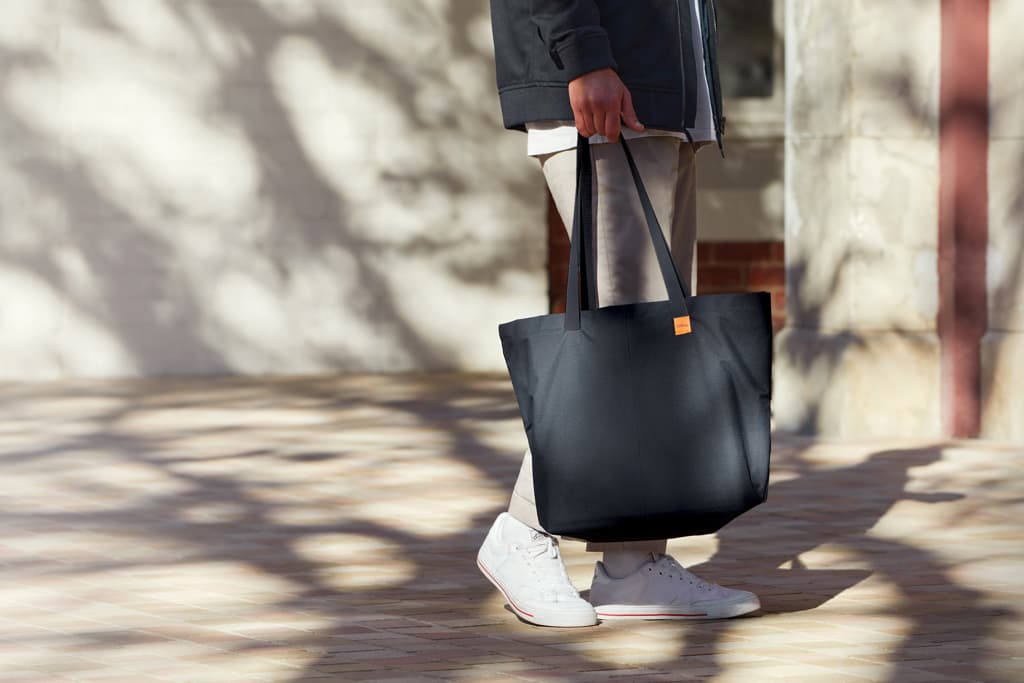
The choice items. Things the new hire selects, ideally before the start date. Apparel sizes and colour choices for branded polos, hoodies or jackets. A tote or backpack model selected from two or three options. Letting people choose costs you a small amount of fulfilment complexity and buys you a meaningful amount of actual use. A T-shirt chosen by the recipient is worn; one assumed to fit is not.
The relationship items. Things tied to milestones — the first month, the first quarter, the first year. These do real work because they mark progress: a higher-quality water bottle at thirty days, a piece of branded outerwear at the end of the first quarter. Spread across the year, the per-month cost is lower than a maximalist day-one kit, and the items show up at moments when they actually mean something.

What to leave out
The strongest move in welcome kits is often subtractive.
Leave out items that promise office culture more than they deliver — wellness gimmicks for teams that do not have time for them, "fun" gadgets that the recipient will quietly bin. Leave out anything fragile, anything food-related with allergens, anything dated by the year on it. Leave out items that only work in one location if your team is hybrid or remote — a branded mug nobody can fit through their kitchen cupboard travels poorly.
And leave out the surprise. The instinct to make the kit a reveal moment usually backfires. New hires want to feel chosen, not stage-managed. A short pre-arrival message that names what is in the box and why often produces more genuine appreciation than the same box delivered as a flourish.
Measuring whether it worked
The honest measurement question for a welcome kit is not "did they like it?" — they will say yes — but "what are they still using in month three, and what did they bin?"
A simple way to find out is to ask, once, a few months in. A short survey to recent joiners listing the kit items and asking which they actually use produces unusually candid answers. It also tells you something useful that is not about the kit at all: what the team's real working environment is like, in the words of the people who just joined it.
It is tempting to attribute retention to a good welcome experience. Be careful here. People stay or leave for a great many reasons, most of them about the work and the manager. The kit, at best, removes a small piece of early friction and sends a signal that the company pays attention to detail. That is worth doing. It is not, on its own, a retention lever.
A more defensible claim is this: across two cohorts, the one that received a thoughtful, restrained kit reported higher first-month sentiment than the one that received either nothing or an over-packed box. If you can show that — even informally, even with small numbers — you have something to take to the next budget conversation.
Making the case
Welcome kits sit at an awkward intersection. HR cares about culture and retention. Finance cares about cost per hire. Procurement cares about category management. None of them owns the outcome alone.
The argument that works is not "this kit is great." It is "for the cost of a sensible quarterly cycle, here is what we expect to change about first-month experience, here is how we will measure it, and here is what we will stop doing if it does not move." That kind of framing — modest claim, measurable test, willingness to cut — earns the budget where a glossy mood-board does not.
It also turns the kit from a one-off purchase into a programme. Programmes get reviewed, improved, and defended on results. Mood-boards get replaced when somebody new takes over the budget.
The first month is short. Spending it well is small work, done with care. Most B2B teams do not need a bigger welcome-kit budget. They need a quieter, more honest one.
For the gifting that comes after the first month — the moments that keep a team feeling noticed through the year — see our employee gift ideas guide. Browse the catalog for welcome-kit items, or contact us and we will help you build a kit that fits the budget you actually have.